
Secure Access. Reliable Records. Connected Systems.
Employee-device operations rely on information moving across teams, systems, vendors, locations, and lifecycle stages.
As more people and tools become involved, organizations need a dependable way to manage access, document activity, maintain accountability, and keep relevant details aligned.
Rely-IQ combines platform visibility with managed support to help organizations create more consistent workforce operations, without requiring every team to rely on separate records, repeated updates, and disconnected systems.
What Are Security, Compliance, and Integrations in a Workforce Operations Platform?
Security helps protect access to workforce-operations information. Compliance support helps organizations maintain consistent procedures, responsibilities, and records. Integrations help connect relevant employee, device, logistics, support, and lifecycle information across the systems involved in the work.
Together, these capabilities support a more dependable operating environment. Rely-IQ can help strengthen consistency and recordkeeping, but each organization remains responsible for determining and meeting its legal, regulatory, privacy, security, and compliance obligations.
Security Is More Than Controlling Access
Secure access is important, but dependable workforce operations require more than confirming that someone can sign in.
Organizations also need to know whether access is appropriate, ownership is understood, activity is documented, and agreed procedures are being followed.
Rely-IQ helps bring access, accountability, records, and follow-through into one structured approach.
Basic Platform Security


Trusted Workforce Operations
Security protects access. Trusted operations also protect the integrity of the process.
The Right Information for the Right Responsibilities
Different teams need different information to perform their work.
Rely-IQ helps organizations align access and information sharing with team responsibilities, implementation requirements, and available platform capabilities.
Not every team needs every detail. The goal is to make relevant information available to the people responsible for acting on it while respecting the organization’s access requirements.
HR
Access employee events, onboarding readiness, transitions, and workforce-related device activity relevant to HR responsibilities.
IT
Review device preparation, assignments, support needs, technical requirements, and lifecycle status.
Operations
See workflow progress, logistics activity, vendors, exceptions, ownership, and open actions.
Finance
Review asset accountability, inventory, recoveries, reuse activity, and replacement information relevant to financial oversight.
Not every team needs every detail. The goal is to make relevant information available to the people responsible for acting on it while respecting the organization’s access requirements.
Keep Lifecycle Activity Documented
Employee-device operations create records throughout onboarding, active use, support, recovery, reuse, and retirement.
When those details are spread across email, spreadsheets, vendor systems, and individual team updates, it becomes difficult to determine what happened, who was involved, and what remains incomplete.
Rely-IQ helps organize lifecycle activity into a more dependable operating record.
Employee and Device Assignments
Document which equipment is associated with an employee, role, team, or location.
Preparation and Deployment
Maintain details about device preparation, assignment, shipment, delivery, and readiness.
Support and Replacement Activity
Record device issues, repairs, replacements, escalations, and related follow-through.
Recovery and Inspection
Document return activity, outstanding equipment, receipt, inspection, and next-stage processing.
Redeployment and Retirement
Maintain records showing whether equipment was reused, reassigned, repaired, replaced, or retired.
Ownership and Status History
Help teams determine who was responsible, what occurred, where the activity currently stands, and what still requires attention.
A dependable operating record helps teams answer what happened, who was involved, what was completed, and what should happen next.
Consistency Supports Compliance
Turn Policies Into Repeatable Processes
Policies are difficult to support when daily work depends on memory, informal email handoffs, disconnected spreadsheets, undocumented exceptions, and unclear ownership.
Rely-IQ helps organizations translate approved procedures into more repeatable employee-device workflows with defined roles, recorded activity, and clearer follow-through.
Onboarding Procedures
Support consistent equipment preparation, assignment, delivery, and readiness steps.
Offboarding Procedures
Support employee instructions, recovery follow-up, receipt, inspection, and next-stage decisions.
Device-Handling Standards
Help maintain consistent preparation, care, recovery, reuse, and retirement practices.
Exception Management
Document when the standard procedure changes, why it changed, and what action follows.
Review and Oversight
Make relevant lifecycle records easier to organize for internal evaluations, process reviews, and audit preparation.
Rely-IQ can support consistent procedures and recordkeeping. The customer organization remains responsible for establishing its requirements and meeting its legal, regulatory, privacy, security, and compliance obligations.
Bring Workforce Systems Into the Process
Employee-device operations often depend on details held across several systems.
Employee status may live in an HR platform. Device assignments may be stored in an asset system. Support activity may appear in a ticketing platform. Shipping updates may come from carriers or vendors.
When these systems remain disconnected, teams may need to re-enter information, reconcile competing records, and communicate changes manually.
Rely-IQ begins by identifying which details matter to the workflow, where they currently live, and how they can be incorporated through available connection methods or agreed handoffs.
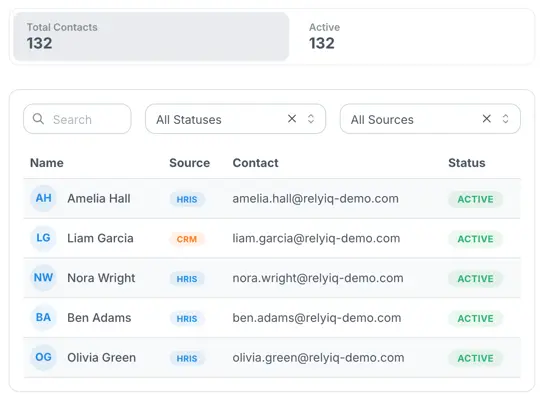
Integrations That Support the Employee Device Lifecycle
The systems involved may differ by organization, but the information they provide often supports the same employee-device journey.
Available connection methods should be reviewed as part of implementation planning.
HR and Workforce Systems

Employee starts, departures, roles, locations, status changes, and workforce events.
IT Service and Support Systems
Support requests, assignments, repairs, replacements, escalations, and issue status.
Device and Asset Systems
Device records, assignments, inventory, ownership, and lifecycle status.
Identity and Access Systems
Employee identity, account status, and access-related events when applicable.
Logistics and Carrier Systems
Shipment, delivery, return, recovery, redirect, and tracking information when available.
Financial and Procurement Systems
Purchasing, inventory, vendor, asset, and cost-related information relevant to the workflow.
Connections may involve supported integrations, structured information exchange, or managed handoffs based on the customer’s environment and available Rely-IQ capabilities.
Reduce Duplicate Entry and Conflicting Information
Disconnected systems can create more work than the original employee or device request.
The same details may be entered several times, updated in one system but not another, or communicated differently across departments.
Connecting relevant information can help reduce those gaps.
Fewer Manual Updates
Help reduce the need to re-enter the same employee, device, location, or status details in multiple places.
More Consistent Records
Support better alignment of relevant employee and device information throughout the workflow.
Faster Workflow Starts
Use confirmed employee or device events to begin the appropriate activity when available.
Clearer Ownership
Make it easier to determine which system, team, or person owns the next action.
Better Reporting Context
Bring together details from different stages so teams can see a more complete operating picture.
Fewer Missed Handoffs
Help reduce the risk that an employee or device change remains isolated within one department or system.
Connected information does not eliminate every manual task, but it can reduce unnecessary re-entry, reconciliation, and back-and-forth.
Maintain Accountability Across Teams and Vendors
Dependable workforce operations rely on more than systems. They also depend on people understanding their roles.
Rely-IQ helps keep ownership and status visible across the teams, employees, vendors, and service providers involved in the work.
Trust improves when responsibility remains visible throughout the process.
Internal Teams
Understand which department owns the decision, approval, information, or required action.
Rely-IQ
Coordinate the managed services and employee-device work included within the customer engagement.
Employees
Receive instructions and complete required actions such as confirming delivery or returning company equipment.
Vendors and Carriers
Provide assigned services, status updates, and follow-through within their areas of responsibility.
Leadership and Oversight Teams
Review lifecycle status, records, exceptions, and outstanding activity.
Trust improves when responsibility remains visible throughout the process.
A Shared Responsibility Model
Technology, Process, and People Working Together
Security, compliance support, and dependable workforce operations cannot be delivered by software alone.
The platform, the Rely-IQ team, and the customer organization each have an important role.
The Platform Helps Provide
- Access to relevant employee and device information
- Status, ownership, and workflow visibility
- Lifecycle and activity records
- Exception and reporting history
- Connected information when available
- Greater context across employee-device operations
The Rely-IQ Team Helps Coordinate
- Implementation and workflow planning
- Employee-device processes
- Documentation and follow-through
- Vendors, carriers, and logistics
- Exceptions and escalations
- Available system connections
- Ongoing managed support
The Customer Organization Maintains Responsibility For
- Internal security requirements
- Access approvals
- Organizational policies
- Legal and regulatory obligations
- Employee and vendor governance
- Source-system accuracy
- Risk, privacy, and compliance decisions
The platform provides structure and visibility. Trusted operations depend on everyone understanding their responsibility.
Connect What You Use Today. Adapt as You Grow.
Organizations may rely on different HR systems, IT tools, support platforms, asset records, logistics providers, reporting practices, and internal policies.
Rely-IQ begins by understanding the current environment, the information required to support employee-device operations, and the access and security expectations that must be considered.
Implementation may involve available integrations, structured information exchange, managed workflows, agreed handoffs, or a phased connection strategy.
The goal is not to replace every system. It is to help the systems and teams involved in workforce operations work together more effectively.

Explore Related Platform Capabilities
Security, compliance support, and integrations become more valuable when they remain connected to the employee-device workflows and platform information they help protect.

Analytics & Reporting
See how employee-device activity, lifecycle status, ownership, exceptions, and outstanding work become easier to understand.

Device Lifecycle Management
Maintain records and accountability from preparation and deployment through recovery, reuse, and retirement.

Multi-Location Logistics
Coordinate device deliveries, recoveries, redirects, carriers, locations, and delivery exceptions through one managed process.

Managed Support & Employee Experience
Connect employee needs, device activity, ownership, communication, and support follow-through.
Build a More Trusted and Connected Operating Process
A stronger operating foundation begins with understanding how information is accessed, recorded, shared, and connected today.
We’ll learn which systems your teams use, where employee and device information lives, who requires access, which records are difficult to maintain, and where manual handoffs create risk.
From there, Rely-IQ can help identify practical opportunities to improve access, strengthen recordkeeping, support more consistent procedures, and connect relevant systems through an implementation approach aligned with your requirements.
Frequently Asked Questions About Security, Compliance, and Integrations
What do security, compliance, and integrations mean within a Workforce Operations Platform?
Security helps protect access to workforce-operations information. Compliance support helps organizations maintain more consistent processes, responsibilities, and records. Integrations help connect relevant employee, device, logistics, support, and lifecycle information across the systems involved in workforce operations.
How does Rely-IQ help organizations support operational compliance?
Rely-IQ can help organizations structure repeatable employee-device processes, maintain lifecycle records, clarify responsibilities, document exceptions, and organize information for internal review. These capabilities can support operational consistency and audit preparation, but they do not replace an organization’s legal, regulatory, privacy, security, or compliance responsibilities.
Does using Rely-IQ make an organization compliant with specific regulations?
No. Using Rely-IQ does not automatically make an organization compliant with any law, regulation, framework, or industry standard. Each organization remains responsible for determining its requirements, establishing appropriate policies and controls, and confirming that its technology, vendors, processes, and records meet those obligations.
What types of systems can Rely-IQ connect with?
Depending on confirmed capabilities and implementation requirements, Rely-IQ may support connections or information exchange involving HR and workforce systems, IT support platforms, device and asset systems, identity tools, logistics providers, and financial or procurement systems. Available methods should be reviewed during implementation planning.
How can integrations reduce manual work and disconnected information?
Integrations and structured information exchange can help reduce repeated data entry, conflicting records, missed handoffs, and manual status updates. By connecting relevant employee and device information across the process, teams can work from a more consistent operating record and better understand ownership, status, and required actions.